

Where Are Toyotas Made? Explore Toyota Plant Locations
 Image Credit: Dallas News
Where Are Toyotas Made? A Guide to Toyota Manufacturing Locations
Toyota is a global leader in the automotive industry, known for reliability and innovation. Many shoppers ask, where are Toyotas made, and the answer spans multiple countries and continents. So, where are these cars actually built?
Toyota’s manufacturing network spans the globe. From Japan to North America, Europe, and beyond, Toyota has a significant presence. Each location plays a crucial role in the production process.
Understanding Toyota’s manufacturing sites offers insight into its global strategy. These sites are more than just factories; they are hubs of technology and efficiency.
This guide examines Toyota’s global manufacturing locations. Discover the significance of each site and the models they produce.
Join us as we explore the world of Toyota’s production facilities!
Where are Toyota Vehicles Built?
Toyota manufactures vehicles across multiple continents, including Japan, North America, Europe, Asia, Africa, and South America. While Toyota remains a Japanese automaker at its core, many models sold in the United States and other regions are built locally to improve quality control, reduce shipping costs, and meet market demand. Toyota uses a global production strategy supported by the Toyota Production System to ensure consistency, reliability, and efficiency regardless of where a vehicle is assembled.
Where Are Toyotas Made? An Overview
Credit: Toyota
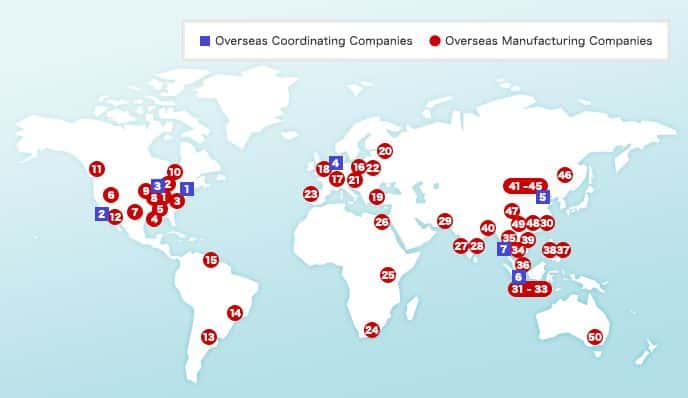
Toyota’s manufacturing network is vast and strategic. It includes sites across several continents. This network ensures Toyota meets global demand efficiently.
The company’s headquarters in Toyota City, Japan, coordinates a complex web of facilities. These facilities are strategically positioned for optimal logistics and supply chain performance.
Toyota operates production plants in diverse regions, enhancing flexibility and market responsiveness.
Asia includes major facilities in Japan, Thailand, Indonesia, and India.
North America includes the United States, Canada, and Mexico.
Europe includes plants in the UK, France, the Czech Republic, and Turkey.
Africa and South America support both local markets and exports.
Each site brings unique strengths to Toyota’s operations. From advanced robotics to lean assembly lines, Toyota plants follow strict global standards while adapting to regional needs.
The Heart of Toyota: Manufacturing in Japan
Japan remains the foundation of Toyota’s manufacturing operations. This is where Toyota began and where many of its most advanced facilities operate today.
Toyota City, Japan, houses the company’s headquarters and several major plants. Japanese facilities are known for high automation, advanced quality control, and close integration with Toyota’s engineering teams.
Key Japanese production centers include:
- Tahara Plant: Produces Lexus models such as the LS and LC.
- Motomachi Plant: Produces specialty and performance-focused vehicles.
- Tsutsumi Plant: Focuses on hybrid models like the Prius.
- Kyushu Plants: Produce vehicles for export, including SUVs and Lexus models.
Japanese plants emphasize craftsmanship, precision, and continuous improvement. These facilities often introduce new manufacturing techniques before they are deployed globally.
Toyota Manufacturing Sites in North America
North America plays a critical role in Toyota’s global production strategy. Many Toyota vehicles sold in the U.S. are built in North America rather than imported from Japan.
Toyota manufactures sedans, SUVs, trucks, engines, and components across the United States, Canada, and Mexico.
Popular models produced in North America include:
- Toyota Camry
- Toyota Corolla
- Toyota RAV4
- Toyota Tundra
- Toyota Tacoma
These plants are designed to serve local markets while maintaining Toyota’s global quality standards.
United States: Major Toyota Plant Locations
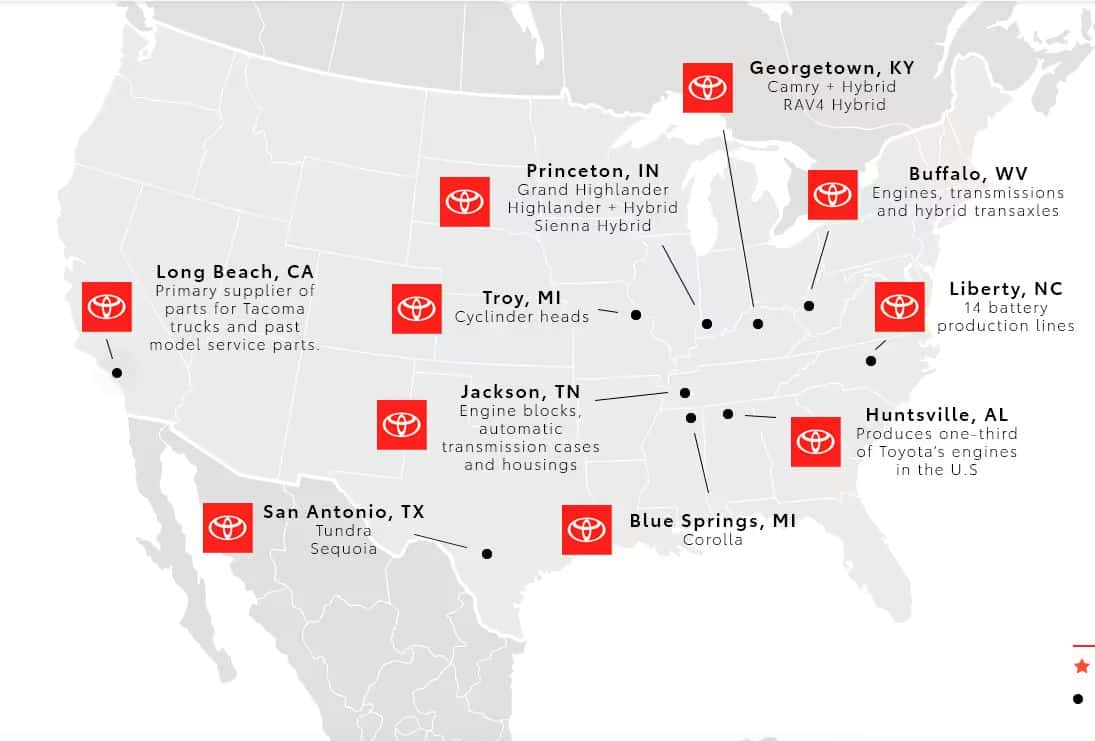
Toyota operates several major manufacturing facilities across the United States.
Georgetown, Kentucky, is Toyota’s largest manufacturing plant in the world. It currently produces the Toyota Camry and Lexus ES.
San Antonio, Texas, focuses exclusively on full-size trucks and produces the Toyota Tundra.
Princeton, Indiana, manufactures the Toyota Sienna and Toyota Highlander.
Huntsville, Alabama, is home to a major engine manufacturing facility operated through Mazda Toyota Manufacturing, producing engines for multiple Toyota vehicles.
Each U.S. facility uses advanced automation, strict quality controls, and sustainable manufacturing practices.
Canada and Mexico: Expanding North American Production
Toyota’s Canadian and Mexican facilities are essential to its North American supply chain.
In Canada, Toyota operates plants in Cambridge and Woodstock, Ontario. These facilities produce the Toyota RAV4, Lexus RX, and Lexus NX.
In Mexico, Toyota’s Guanajuato plant produces the Toyota Tacoma, which became fully Mexico-built for the North American market starting with the latest generation.
These facilities focus on:
- Regional production efficiency
- Advanced robotics and automation
- Lower emissions and reduced waste
Together, Canada and Mexico help Toyota meet North American demand without sacrificing quality.
Toyota’s European Manufacturing Locations
Toyota maintains a strong manufacturing presence across Europe to meet strict regulatory standards and regional preferences.
The Burnaston plant in the United Kingdom produces the Toyota Corolla for European markets.
The Valenciennes plant in France manufactures the Toyota Yaris, including hybrid variants.
The Kolín plant in the Czech Republic produces the Toyota Aygo X.
Turkey’s Sakarya plant builds the Toyota Corolla and Toyota C-HR.
European facilities emphasize sustainability, compact vehicle production, and hybrid technology.
Toyota Production Plants in Asia and Oceania
Beyond Japan, Toyota operates extensive manufacturing facilities throughout Asia.
Thailand serves as a major export hub, producing models like the Hilux and Fortuner. Indonesia manufactures vehicles such as the Kijang Innova for Southeast Asian markets.
India’s Bidadi plants produce models like the Corolla and Camry for regional distribution. These facilities focus on affordability, fuel efficiency, and durability while maintaining Toyota’s global standards.
In Oceania, Toyota no longer manufactures vehicles but maintains strong distribution, engineering, and testing operations in Australia.
Toyota’s Manufacturing Presence in Africa and South America
Toyota operates key production plants in emerging markets to support regional growth.
In South Africa, the Durban plant assembles the Hilux and Fortuner for local use and export.
In South America, Toyota operates plants in Argentina and Brazil. While Argentina’s Zárate plant produces the Hilux and SW4. Brazil’s Indaiatuba plant produces passenger vehicles for the domestic market.
These operations strengthen local economies and expand Toyota’s global footprint.
The Toyota Production System: Efficiency and Innovation
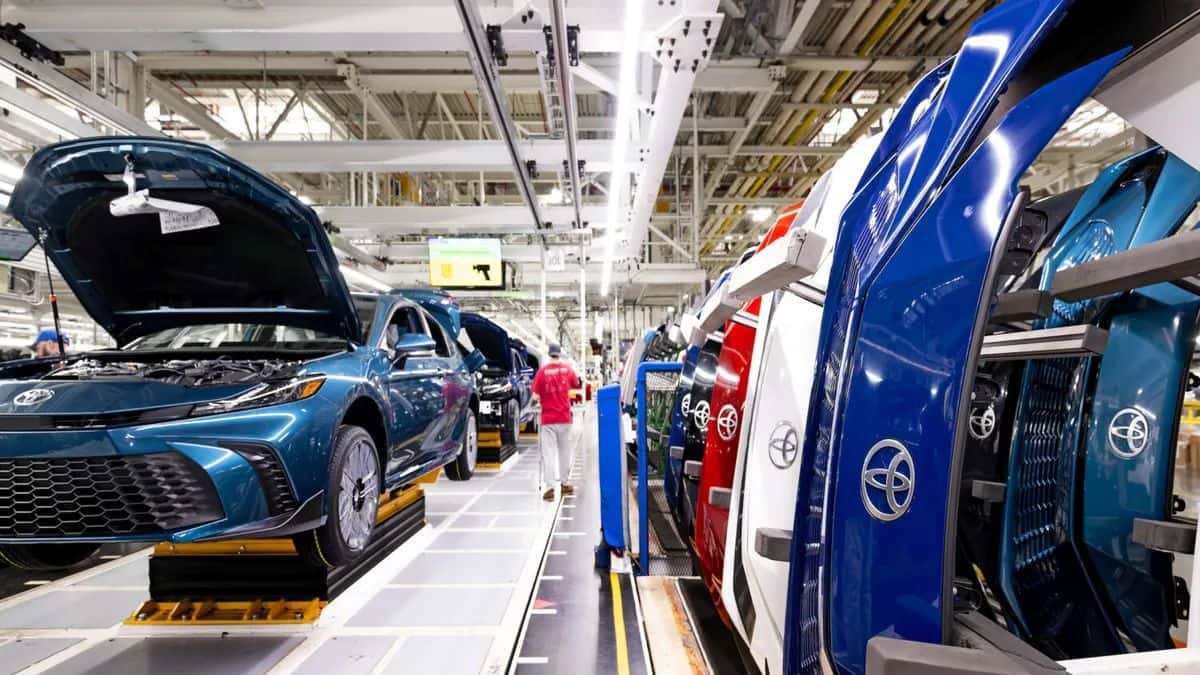
The Toyota Production System (TPS) is the foundation of Toyota manufacturing worldwide.
TPS focuses on eliminating waste, improving efficiency, and empowering workers to stop production when issues arise.
Core principles include:
- Just-in-Time production
- Jidoka (automation with human oversight)
- Kaizen (continuous improvement)
This system allows Toyota to maintain consistent quality across every plant globally.
Sustainability and Community Impact at Toyota Manufacturing Sites
Toyota prioritizes sustainability across its manufacturing operations.
The company invests in energy-efficient plants, water conservation, and carbon reduction initiatives. Toyota also supports local communities through education programs, workforce training, and supplier partnerships.
These efforts reinforce Toyota’s long-term commitment to responsible manufacturing.
Understanding Toyota VIN Codes and Where Your Vehicle Was Built
You can identify where your Toyota was built by checking the first character of its VIN (Vehicle Identification Number).
If the VIN starts with a J, the vehicle was built in Japan.
If it starts with a 1, 4, or 5, it was built in the United States.
If it starts with a 2, it was built in Canada.
If it starts with a 3, it was built in Mexico.
The VIN can usually be found on the dashboard, the bottom corner of the windshield, or inside the driver’s door jamb.
Frequently Asked Questions About Toyota Manufacturing
Are all Toyotas made in Japan?
No. Many Toyota vehicles sold in the U.S. are built in the United States, Canada, or Mexico.
Is a Japan-built Toyota of better quality?
Toyota applies the same quality standards worldwide. Build location does not determine reliability.
Where is the Toyota Tacoma made?
The current-generation Toyota Tacoma is manufactured in Mexico.
Where is the Toyota Camry made?
The Toyota Camry is manufactured in Georgetown, Kentucky.
How can I tell where my Toyota was built?
Check the first character of the VIN to identify the country of assembly.
Conclusion: The Global Reach of Toyota Plant Locations
Toyota’s manufacturing network spans the globe while maintaining consistent quality and reliability.
By building vehicles close to the markets they serve, Toyota ensures efficiency, sustainability, and long-term customer satisfaction.
This global approach is a major reason Toyota remains one of the most trusted automotive brands in the world.
Visit Kalispell Toyota to shop new and used Toyota vehicles, compare models, and schedule a test drive with our local team today!
1 comment(s) so far on Where Are Toyotas Made? Explore Toyota Plant Locations
I have a Toyota C-HR. Love the compact size without compromising head and feet space.